Easy High-Protein Habits for Women Over 40 (No Cooking Project Required)
Twelve small, honestly-rated protein habits for women over 40 — the fridge-door trick, the Greek-yogurt swap, what to grab at a gas station, and more. No meal plan, no recipes, no calorie math. Just steal the two that fit your week.

By Diane Marsh··11 min read
Claims on this page are checked against Harvard Health (Harvard Medical School) and a 2025 peer-reviewed nutrition journal — both sources are linked below.
General education, not medical advice. Talk to your doctor before starting something new.
The short version
- This isn't a meal plan — it's a list of twelve small protein habits, and you only need two or three of them.
- Where you keep food matters as much as what you buy — the fridge-door principle alone changes what you reach for first.
- Spreading protein across your whole day tends to work better than loading it all into dinner.
- Every habit here comes with its honest downside too — nothing on this list is presented as perfect.
- Pick two to start. You can always add a third later.
Somewhere between your fourth Pinterest scroll and the third protein-smoothie ad in a row, it starts to feel like getting enough protein requires a new grocery budget, a blender you don't own, and a meal-prep Sunday you don't actually have time for.
Here's the honest version: it doesn't. This isn't a meal plan, and I'm not handing you a spreadsheet. It's a list of small habits — the kind that survive an ordinary Tuesday, when you're tired and the dishwasher still isn't empty. Steal whatever fits your week. Skip the rest.
Why protein is worth a little more of your attention right now
You didn't imagine it: protein seems to matter more at 45 or 52 than it did at 25. Hormone changes through perimenopause and menopause reach into muscle, not just hot flashes and sleep — which is part of why so many women notice their strength feels different even when their routine hasn't changed at all.
None of that means you're behind. It just means protein habits are one of the more useful, lower-effort things you can hand your body right now, alongside the strength training that actually builds the muscle protein helps support. If you want the exact number to aim for, I've worked through that math separately — this page is the easier part: what to actually do about it.
So here's what I've actually stolen, borrowed, or landed on myself — twelve small habits, no cooking project required. Take whichever ones fit. Ignore the rest completely; nobody's checking.
Habits that live in your kitchen
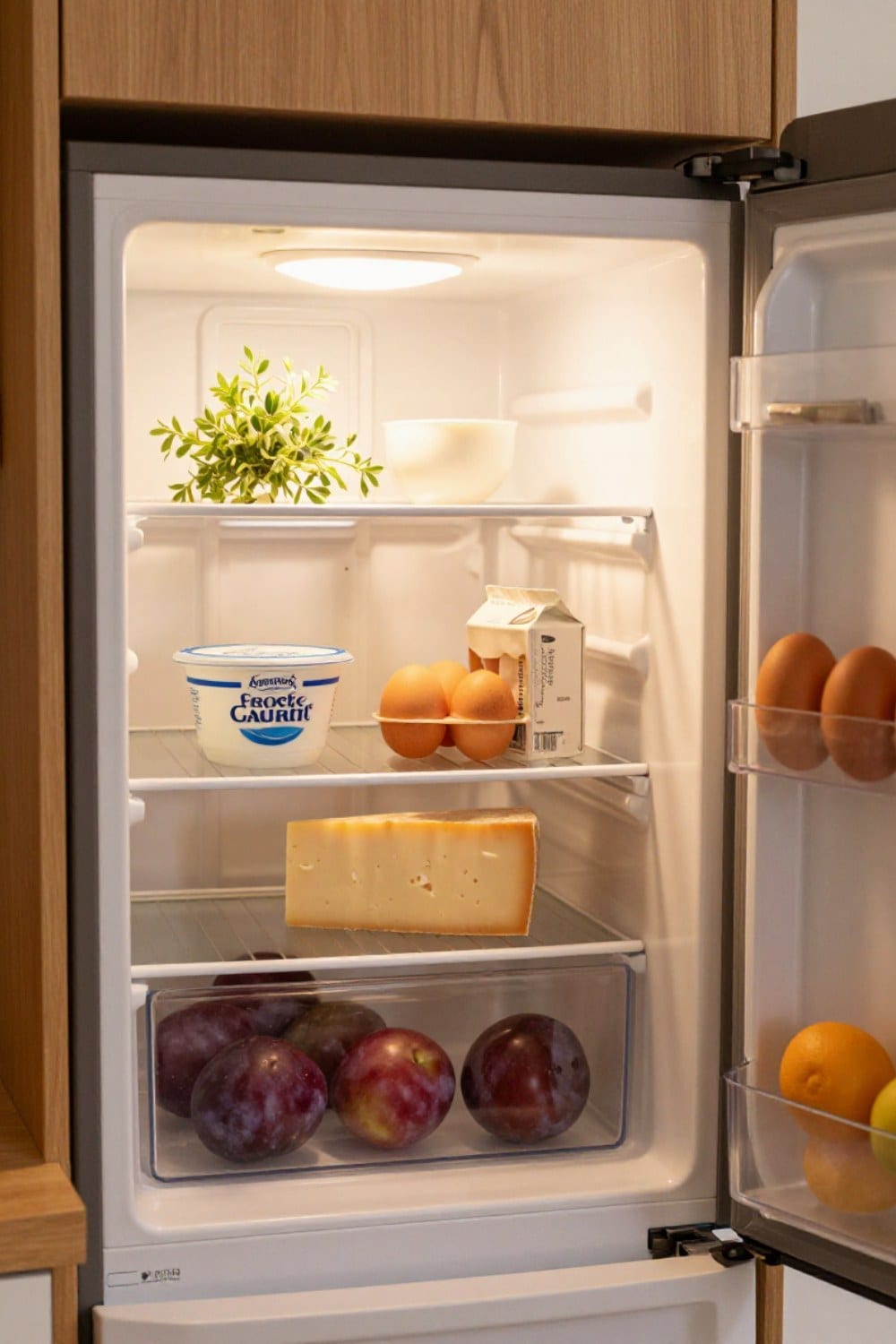
- The fridge-door principle. Keep the protein you reach for — yogurt, hard-boiled eggs, string cheese — right at eye level in the door, not buried behind last week's leftovers. What it is: pure positioning. Why it works: your hand goes to whatever's easiest to see. Honest downside: it needs restocking, or you're staring at an empty shelf by Wednesday.
- The Greek-yogurt swap. Swap it in wherever a sweeter, lower-protein yogurt usually goes. What it is: one substitution, not a new food group. Why it works: plain Greek yogurt carries meaningfully more protein per serving than regular yogurt, same bowl. Honest downside: the plain kind is genuinely tart — a spoonful of fruit or a drizzle of honey helps without undoing the swap.
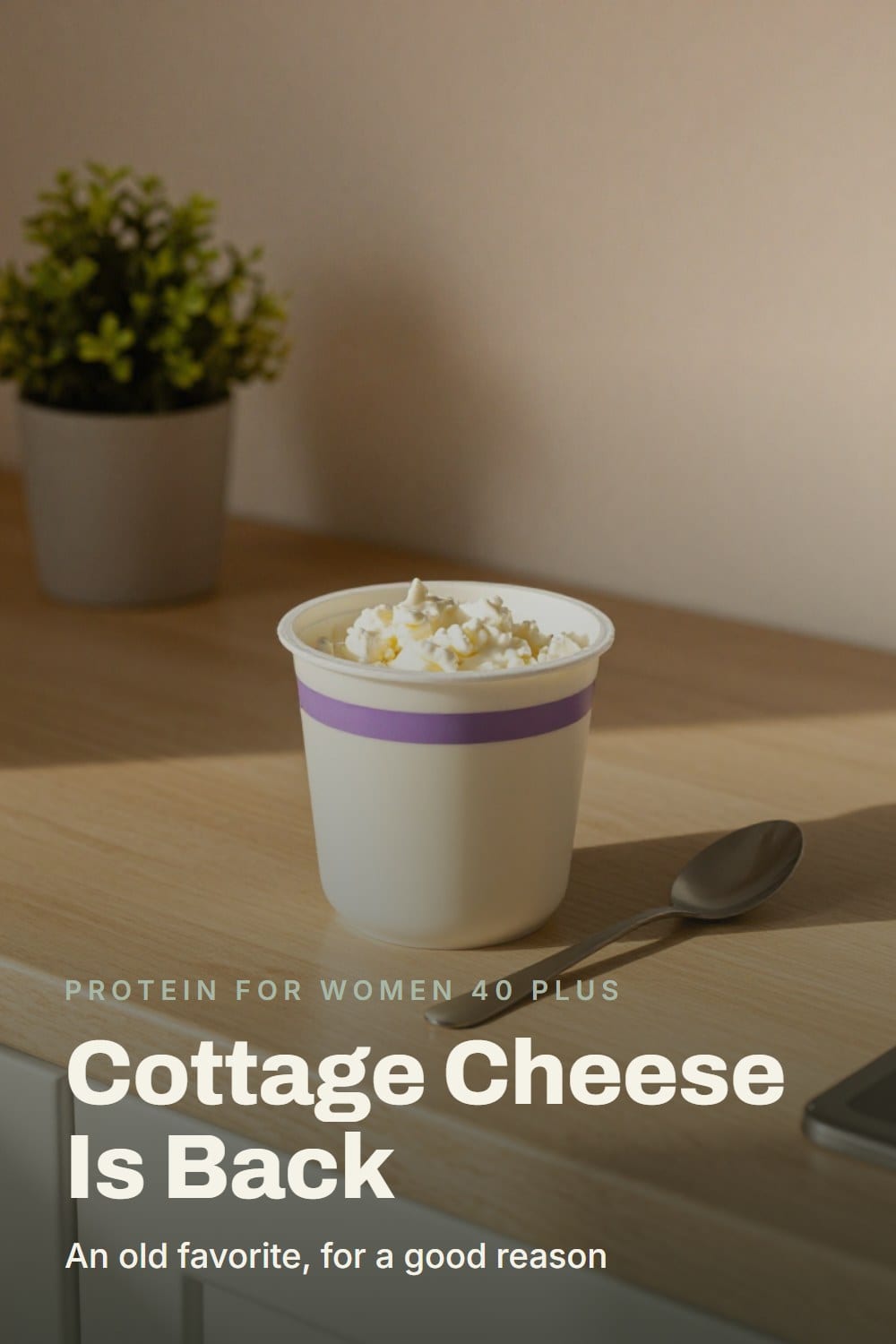
- Cottage cheese's comeback. Keep a tub in the door, savory with salt and pepper, or sweet with fruit. What it is: an old-fashioned food having a real moment. Why it works: it's ready in the time it takes to find a spoon. Honest downside: the texture is genuinely divisive — if you wrote it off years ago, you might be surprised now, but not everyone comes around.
- Eggs, cooked once, grabbed all week. A batch of hard-boiled eggs in the fridge, ready to grab whole or chopped onto whatever you're eating. What it is: batching one task instead of repeating it daily. Why it works: the hardest part of an easy habit is remembering to start it, and a full container removes that step for a week. Honest downside: they don't love the freezer, so it's a weekly task, not a one-and-done.
- Canned fish, out of the pantry. A couple of cans of tuna, salmon or sardines for the days nothing is thawed. What it is: shelf-stable protein that needs no cooking. Why it works: it's there on the exact day your fridge is empty and takeout feels like the only option. Honest downside: the smell and flavor are real — if sardines aren't for you, tuna or salmon are the gentler start.
- Beans, added to whatever's already in the pan. A can of black beans or chickpeas, rinsed and added into a soup, a salad, or alongside eggs. What it is: an addition, not a new dish. Why it works: inexpensive, already cooked, and they quietly take on whatever flavor is already there. Honest downside: canned beans need a real rinse, or the sodium is higher than you'd guess.
Habits for the rest of your day
- Anchor it to something you already do. Attach a protein habit to a routine that's already automatic — protein while the coffee brews, or right after you brush your teeth. What it is: habit-stacking. Why it works: you don't have to remember a brand-new habit if it's hooked to an old one. Honest downside: skip the anchor routine — a slow morning, a trip — and the protein habit tends to skip right along with it.
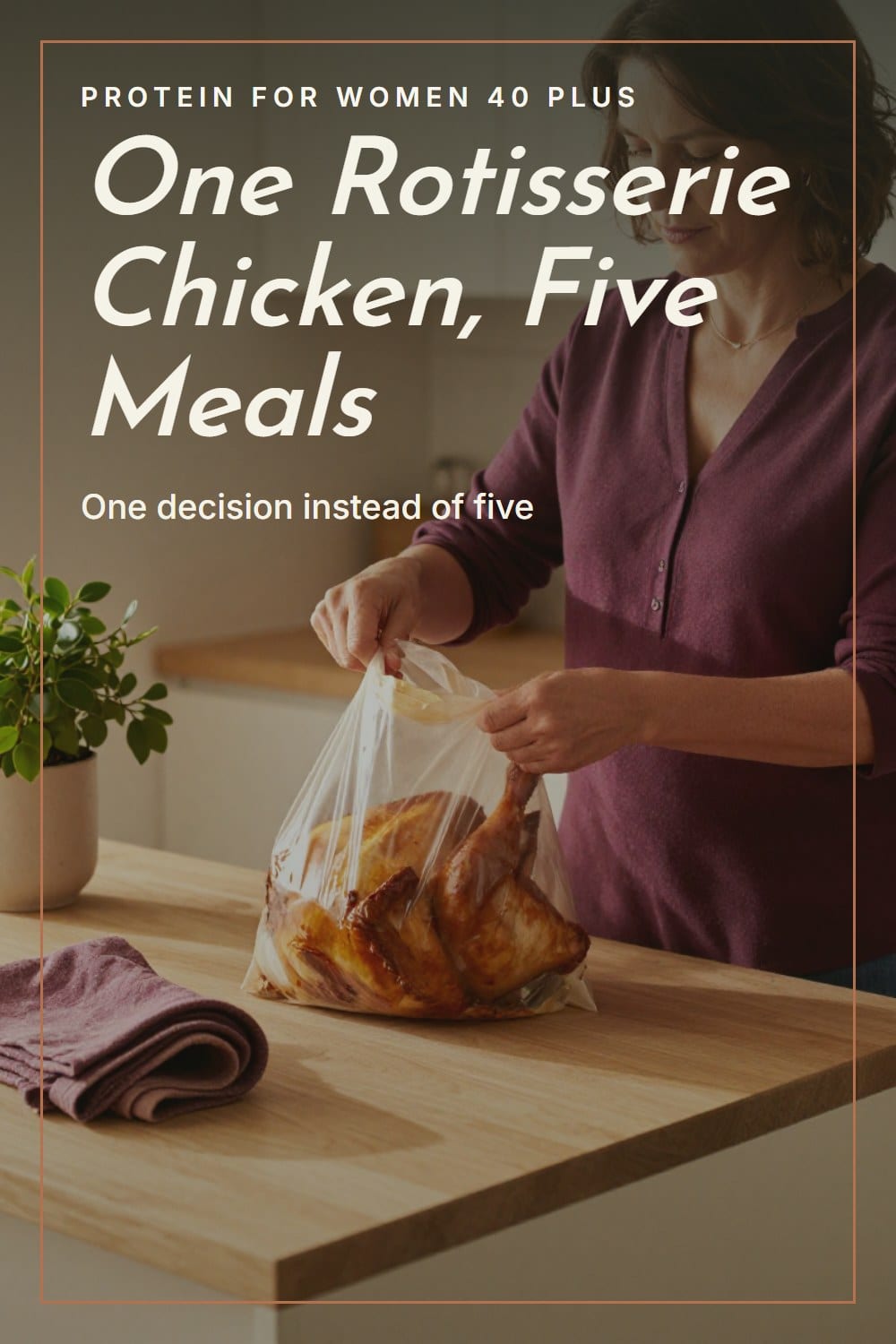
- One rotisserie chicken, one good decision. Pick one up on your regular grocery trip and count it as protein already prepped for the next several meals. What it is: one decision instead of five. Why it works: already cooked, already seasoned, and pulls apart in under a minute. Honest downside: it doesn't last past three or four days in the fridge, so it's a weekly habit, not a stockpile.
- The protein-first bite at dinner. Eat a few bites of whatever protein is on your plate before you start on the rest. What it is: an order-of-eating habit, not a different meal. Why it works: a simple way of noticing whether protein made it onto the plate at all, while there's still time to add more. Honest downside: on nights protein isn't really part of the meal, this habit doesn't have much to work with — it's a nudge, not a fix.
- A jar of nuts in the car. A small jar kept in the console for the stretch between errands. What it is: the fridge-door idea, for the hours you're not home. Why it works: it's already there before hunger makes the decision for you. Honest downside: it's easy to work through the whole jar without noticing while you drive, so a small container beats a giant one.
- What to actually grab at a gas station. String cheese, a hard-boiled egg pack, jerky, or a protein bar with a short ingredient list tend to carry more protein than most of what's stacked near the register. What it is: a plan for the days you didn't plan. Why it works: knowing your go-to order ahead of time means you're not deciding while tired with limited choices. Honest downside: shelves vary by state and by chain, so this is a strategy more than a fixed menu.
- Add the protein side when you eat out. Grilled chicken instead of extra bread, a side of beans instead of a second starch, when you're ordering rather than cooking. What it is: fridge-door thinking, applied to a menu instead of a kitchen. Why it works: the habit doesn't take a night off just because you didn't cook. Honest downside: it usually costs a little more, and not every menu has an easy swap.
Where to actually start
Pick two to start with
You don't need all twelve at once. Here are four easy pairings to start with — pick any two, not all of them.
| Habit | When It Fits | Why It Sticks |
|---|---|---|
| Fridge-door principle | Anytime you open the fridge | No decision left to make |
| Greek-yogurt swap | Breakfast | One swap, not a new habit to remember |
| Protein-first bite | Dinner | Needs nothing new in the fridge |
| Rotisserie chicken | One weekly grocery trip | One decision covers several meals |
None of this is a number to hit, or a diagnosis of anything — it's what the general research on protein and aging points toward, plus what's actually worked for me. If you want the deeper dive — the actual numbers to aim for, more on getting protein specifically at breakfast, or an honest look at whether a protein powder is worth adding — the full nutrition and protein guide is the place to go next. Here, though: pick two, not twelve.
Where this comes from
Every claim above traces to one of these four.
- 1Are You Eating Enough Protein?
Harvard Health · 2024
Supports: That the body can only make good use of a limited amount of protein at one time (roughly 20 to 40 grams), that there's no extra benefit to getting most of a day's protein from a single meal, and that spreading protein evenly across the day is the better approach; also the baseline recommendation of about 0.36 grams of protein per pound of body weight.
- 2Muscle Loss and Protein Needs in Older Adults
Harvard Health · 2024
Supports: That a 2023 review in the Journals of Gerontology found older adults may benefit from more protein than the standard baseline to help support muscle strength, and that muscle loss with age is a real, well-documented process.
- 3Protein and Aging: Practicalities and Practice
Nutrients · 2025
Supports: That evenly balanced protein amounts of about 25 to 30 grams per meal are enough to make the most of muscle-building signals in older adults, that this response becomes less efficient with age, and that protein intake is often lowest at breakfast and skewed toward later in the day — a pattern that may work against maintaining muscle.
- 4Musculoskeletal Syndrome of Menopause: When Menopause Makes You Ache All Over
Harvard Health · 2026
Supports: That estrogen receptors are present throughout the musculoskeletal system, and that the drop in estrogen at midlife can reduce muscle mass and bone density along with causing widespread aches — part of why protein habits get more attention in your 40s and 50s.
Free, and printable
The free 4-Week Indoor Walking Plan
The plan sign-up is not live yet — the mailing list is still being set up. In the meantime, email hello@strongandrooted.com and Diane will send it to you herself.
One email when there is something worth sending. Unsubscribe whenever you like.
Frequently asked questions
Do I need to hit an exact number of grams every day for this to work?
What if I don't like Greek yogurt or cottage cheese?
Is it really a problem if most of my protein ends up at dinner?
Do I need a protein shake or powder to make any of this work?
A dozen small habits will do more for you than one meal plan you abandon in a few weeks. Start with the fridge door, the yogurt swap, or whichever one felt easiest as you read this — then let it become normal before you add another. Pick two. Just two.
Free, and printable
The 4-Week Indoor Walking Plan
The plan sign-up is not live yet — the mailing list is still being set up. In the meantime, email hello@strongandrooted.com and Diane will send it to you herself.
One email when there is something worth sending. Unsubscribe whenever you like.
Written by
Diane Marsh
At 49 I was tired, achy, sleeping badly, and being told to do more cardio and eat less — which was making all of it worse. I started walking. Fifteen minutes, indoors, in socks. Three years later I am stronger than I was at forty. I write down exactly what I did, cite the research where it exists, and admit where it doesn't.
Diane is not a doctor, a physical therapist, or a dietitian. She is a woman who rebuilt her own strength after perimenopause, reads the research carefully, cites it, and says so when nobody actually knows.
Keep reading
This is the whole nutrition territory in one honest place — not a diet, not a meal plan, just four ideas that actually hold up: protein, fiber, steady energy and what's really just marketing. Read it once and you'll know exactly which deeper guide is yours.
Blood-Sugar-Friendly Habits for Steadier Energy After 40The 3 PM crash feels like a personal failing, but it's mostly a blood-sugar story — what you ate, in what order, and whether you moved afterward. Here's what's actually happening after a meal, why it can feel different in midlife, and the small, honest swaps that make the afternoon gentler.
How Much Protein Do You Actually Need After 40?Most of us are eating less protein than we think, and the old government minimum was never built for a woman trying to hold onto her muscle after 40. Here's the real number in grams you can actually use, why it goes up instead of down with age, and what a full day of it looks like on an ordinary plate — no recipes required.