Anti-Inflammatory Eating After 40 (What's Real and What's Marketing)
Turmeric lattes, celery juice and pricey powders all promise to fight inflammation. I looked at what the research actually shows — some of it is real, most of the excitement is marketing, and the honest version is a lot more boring than any of it. Here's what's actually worth doing.

By Diane Marsh··11 min read
Claims on this page are checked against Harvard Health Publishing, the Harvard T.H. Chan School of Public Health, and the NIH's National Center for Complementary and Integrative Health — all eight sources are linked below.
General education, not medical advice. Talk to your doctor before starting something new.
The short version
- Some eating patterns are genuinely linked to lower inflammation markers in the research — that part is real.
- That's different from a food acting like medicine. No eating pattern stands in for what your doctor does.
- The habits actually backed by research are almost boring: fiber, plants, fish, olive oil, sleep, movement, and not smoking.
- Turmeric lattes, juice cleanses and pricey powders borrow the language of real science, without evidence behind the specific product.
- The 'anti-inflammatory diet' is mostly just eating well — which is exactly why it gets repackaged and resold every year.
If you've bought a turmeric latte, a jar of celery juice mix, or a pricey 'anti-inflammatory' powder in the last year, you are not the problem. You were sold a very specific promise: that one food, one drink, or one scoop could calm the inflammation supposedly behind your joint aches and your afternoon slump. It's a compelling story. It's also not quite honest.
Here's the straight answer, before anything else: some eating patterns really are linked to lower markers of inflammation in the blood. That part is real, and we'll get into exactly what the research supports. What's not real is the idea that eating or drinking any single thing works like a prescription, acting on a diagnosed problem the way a medication would. No eating pattern does that job. Nobody's kitchen ever will.
So let's walk through it in depth: what inflammation actually is, what's genuinely backed by research, what's just marketing, and the small habits actually worth stealing.
What Inflammation Actually Is (And Why It Isn't The Villain)
Inflammation gets talked about like it's an enemy hiding in your salad. It isn't. Inflammation is your body's repair crew — the process that shows up after an injury or an infection, clears out the damage, and gets the healing started. Without it, a scraped knee would never close up and a cold would never pass.
That distinction matters more than anything else here. You don't want zero inflammation — that would mean an immune system that can't do its job. You want the repair crew to finish up and go home, not camp out indefinitely. That's why daily habits matter, and why no single spice ever will.
The Boring List That Actually Has Research Behind It
Here's the part nobody puts on a product label, because it doesn't sell anything. The eating-and-living pattern actually associated with lower inflammation markers is almost aggressively unglamorous. No single ingredient. No three-day plan. Just a handful of ordinary habits, repeated for years.
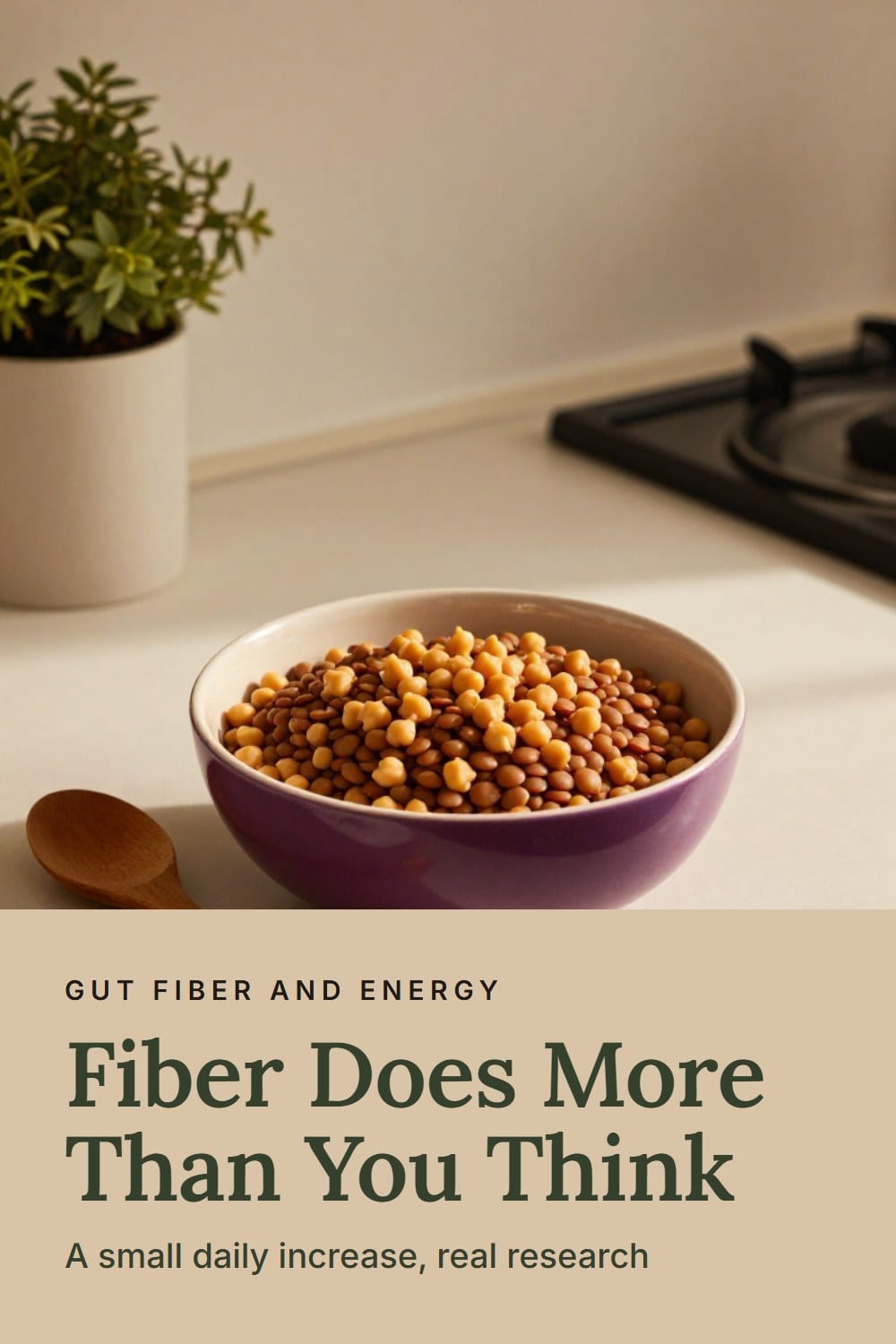
- Fiber — beans, oats, vegetables, whole grains. Gut bacteria break fiber down into compounds that appear to calm inflammatory signals.
- Plants in general — vegetables, fruit, nuts — for that same fiber-and-antioxidant combination, not because any single one is magic.
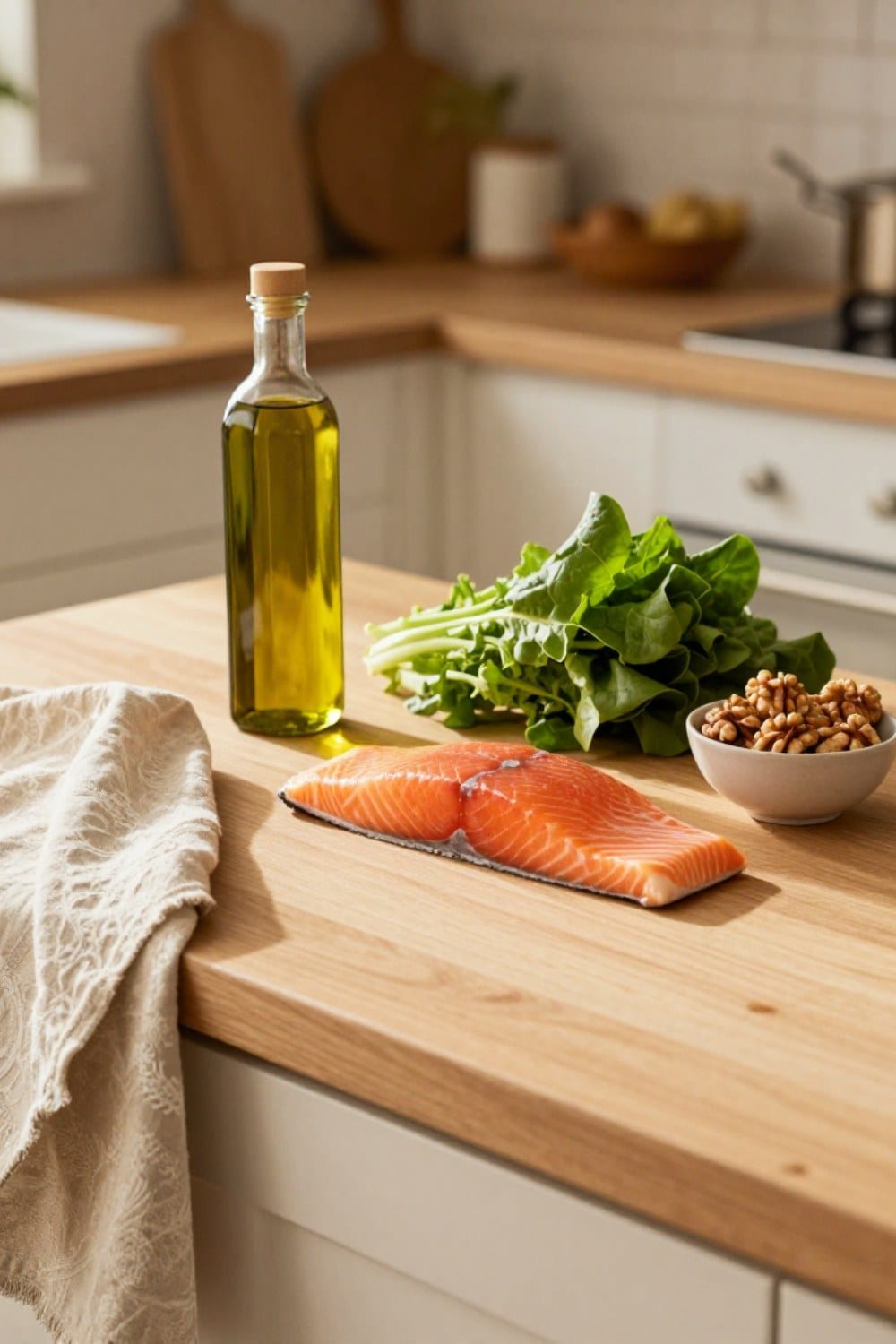
- Fish, especially the fattier kinds like salmon, sardines and mackerel, a couple of times a week.
- Olive oil, used in place of more processed fats, not poured on top of them.
- Sleep, consistently, not just when it's convenient.
- Movement, regular and moderate — nothing extreme required.
- Not smoking — one of the most consistently supported habits here.
You'll notice this overlaps with how we talk about protein after 40 — fish and legumes pull double duty, building muscle and showing up on the lower-inflammation list at once. Whole foods tend to earn their spot on more than one 'good habit' list.
Fiber deserves its own callout, because the research on it is surprisingly specific. If fiber and your gut interest you at all — and if you're navigating perimenopause, it probably should — fiber for perimenopause covers the gut side of this in full.
Sleep and movement round out the list, and neither is a food at all — which is the point. Inflammation doesn't only respond to what's on your plate. Short sleep is tied to higher inflammatory markers; regular movement is tied to lower ones. If steady energy through the day is what you're chasing, blood-sugar-friendly habits for energy covers the daily-habit side in more depth.
What's Actually Marketing (Not Research)
Now for the part that gets left out of most 'anti-inflammatory' content, because leaving it out is what sells the product. A lot of what's marketed to you as fighting inflammation is riding on the credibility of the research above, without any research of its own behind the specific product.
Real Vs. Marketed: An Honest Comparison
Six things you've probably been sold, laid next to what the research actually supports.
| What The Research Actually Supports | What To Do Instead | |
|---|---|---|
| Turmeric lattes and curcumin capsules | Curcumin shows anti-inflammatory activity in lab studies. The government's own research center on complementary health says there isn't enough evidence to back specific claims for the supplement. | Enjoy turmeric in cooking. Skip the pricey capsule promising a specific result. |
| Celery juice | A perfectly fine vegetable with some fiber and water. No research singles it out for inflammation, and a healthy body doesn't need help clearing out anything extra. | Drink it if you like the taste. Skip the juice-bar markup. |
| Single 'superfoods' | The research behind lower inflammation is about whole patterns — plants, fiber and healthy fats together — not one ingredient carrying the effect. | Build the pattern instead of shopping for one magic ingredient. |
| Multi-day cleanses and juice fasts | No compelling evidence these clear out anything the body wasn't already handling. Early weight change comes from eating less for a few days, not the program itself. | Skip it — regular meals, real food, your normal pace. |
| Expensive 'anti-inflammatory' powders | Often the same plant compounds as whole produce, at a fraction of the fiber and none of the research behind an actual eating pattern. | Spend the money on groceries instead — produce, canned beans, canned fish. |
| Elimination diets 'just in case' | Without a diagnosed sensitivity, no research shows broad elimination of gluten, dairy or entire food groups lowers inflammatory markers — it often just means less fiber and fewer nutrients. | Talk with your doctor before cutting out a whole food group 'just in case.' |
Turmeric deserves a closer, honest look, since it's everywhere right now — lattes, capsules, gummies. The curcumin in turmeric shows anti-inflammatory activity in a lab dish, which is why marketers picked it up. What that doesn't tell you is whether a daily capsule does the same thing inside an actual, living body.
The Honest Overlap Nobody's Selling You
Here's the twist, and it's the whole reason this topic gets repackaged every single year: the real, research-backed version of 'anti-inflammatory eating' and just... eating well are almost exactly the same thing.
You can't put a label on 'eat more vegetables, more fiber and more fish, and get decent sleep' and sell it for much. You can put a label on a powder. That mismatch — free advice, priced products — is the engine behind why this gets a shiny new name every January.
Small Habits Worth Stealing
None of this requires a plan, a full shopping overhaul, or a single new appliance. A few small habits, repeated on ordinary days, are what the research actually supports.
- Add one extra serving of vegetables to whatever you're already making, instead of building a whole new meal around it.
- Keep a can of salmon or sardines in the pantry for the weeks fresh fish doesn't happen.
- Swap the cooking oil you already use for olive oil, rather than adding olive oil on top of everything else.
- Anchor a fiber source — oats, beans, a piece of fruit — to one meal you already eat on autopilot, like breakfast.
- Protect the hour before bed the way you'd protect a meeting: screens down, lights low.
- Take the short walk even when you don't feel like a real workout — it still counts.
I'll be honest about where I've actually landed on all of this myself, because it took me longer than it should have to stop shopping for a shortcut.

If you already have a diagnosed condition connected to inflammation — a joint condition, a digestive condition, anything your doctor is managing — this is general information, not a plan for your specific case. That conversation belongs with your doctor, not a blog post. If you're navigating perimenopause symptoms too and aren't sure what's ordinary versus worth a call, when to talk to your doctor about perimenopause covers exactly that.
Where this comes from
Every claim above traces to one of these eight.
- 1Understanding Acute and Chronic Inflammation
Harvard Health Publishing
Supports: That inflammation is fundamentally a protective process — acute inflammation is how the body fights infection and recovers from injury — and that it only becomes a problem when it stays switched on for a long time after the original threat is gone.
- 2Foods That Fight Inflammation
Harvard Health Publishing
Supports: That foods including fatty fish, olive oil, leafy greens, nuts and fruit are associated with lower inflammation, largely credited to their antioxidant and polyphenol content, and that a Mediterranean-style pattern built from these foods together is the most consistently supported approach.
- 3How a Fiber-Rich Diet Promotes Heart Health
Harvard Health Publishing · 2022
Supports: That in a study following more than 4,100 older adults, published in 2022, even a 5-gram increase in daily fiber intake was tied to a significantly lower blood level of C-reactive protein, a marker of inflammation that tracks with heart attack risk.
- 4How Sleep Deprivation Can Cause Inflammation
Harvard Health Publishing
Supports: That sleep deprivation is associated with higher blood levels of inflammatory markers, including C-reactive protein and interleukin-6, and that the cumulative pattern of short sleep over time matters more than any single rough night.
- 5An Action Plan to Fight Unhealthy Inflammation
Harvard Health Publishing
Supports: That regular movement, maintaining a healthy weight, managing stress and not smoking are each associated with lower chronic inflammation, alongside an eating pattern built on fruits, vegetables, whole grains and legumes rather than sugary drinks and heavily processed food.
- 6Diet Review: Anti-Inflammatory Diet
Harvard T.H. Chan School of Public Health, The Nutrition Source
Supports: That there is no single, official 'anti-inflammatory diet' — the approach overlaps heavily with the already-established Mediterranean and DASH eating patterns — and that research on the exact mechanism behind specific 'anti-inflammatory' foods, taken on their own, is not conclusive.
- 7Turmeric: Usefulness and Safety
NCCIH (National Institutes of Health)
Supports: That there isn't enough evidence to definitively conclude whether oral turmeric or curcumin has meaningful health benefits — early evidence for knee-joint comfort is positive but not yet definitive — and that highly bioavailable curcumin formulations have been linked to reports of liver damage.
- 8Juicing: What Are The Health Benefits?
Mayo Clinic
Supports: That juice cleanses often claim to remove toxins, aid digestion or cause weight loss, but no strong scientific proof supports those claims — any weight lost typically returns once regular eating resumes, and juicing strips out the fiber found in whole fruits and vegetables.
Free, and printable
The free 4-Week Indoor Walking Plan
The plan sign-up is not live yet — the mailing list is still being set up. In the meantime, email hello@strongandrooted.com and Diane will send it to you herself.
One email when there is something worth sending. Unsubscribe whenever you like.
Frequently asked questions
Does turmeric actually work for inflammation?
Is there an actual 'anti-inflammatory diet' I should be following?
If I eat this way, will my symptoms actually go away?
What's the single best anti-inflammatory food I should be eating?
Some of what you've been sold about fighting inflammation through food is real, just quieter than the marketing around it. Fiber, plants, fish, olive oil, sleep and a regular walk still have more going for them than any powder in a jar. For the fuller picture of eating well after 40, protein included, our complete guide to nutrition and protein after 40 is the place to start.
Free, and printable
The 4-Week Indoor Walking Plan
The plan sign-up is not live yet — the mailing list is still being set up. In the meantime, email hello@strongandrooted.com and Diane will send it to you herself.
One email when there is something worth sending. Unsubscribe whenever you like.
Written by
Diane Marsh
At 49 I was tired, achy, sleeping badly, and being told to do more cardio and eat less — which was making all of it worse. I started walking. Fifteen minutes, indoors, in socks. Three years later I am stronger than I was at forty. I write down exactly what I did, cite the research where it exists, and admit where it doesn't.
Diane is not a doctor, a physical therapist, or a dietitian. She is a woman who rebuilt her own strength after perimenopause, reads the research carefully, cites it, and says so when nobody actually knows.
Keep reading
This is the whole nutrition territory in one honest place — not a diet, not a meal plan, just four ideas that actually hold up: protein, fiber, steady energy and what's really just marketing. Read it once and you'll know exactly which deeper guide is yours.
Blood-Sugar-Friendly Habits for Steadier Energy After 40The 3 PM crash feels like a personal failing, but it's mostly a blood-sugar story — what you ate, in what order, and whether you moved afterward. Here's what's actually happening after a meal, why it can feel different in midlife, and the small, honest swaps that make the afternoon gentler.
How Much Protein Do You Actually Need After 40?Most of us are eating less protein than we think, and the old government minimum was never built for a woman trying to hold onto her muscle after 40. Here's the real number in grams you can actually use, why it goes up instead of down with age, and what a full day of it looks like on an ordinary plate — no recipes required.