Exercise for Perimenopause: What Actually Helps (and What Doesn't)
She was told to do more cardio and eat less — and it made everything worse. Here's the honest map of what perimenopause actually does to a body that trains: what genuinely helps (ranked), what doesn't, a realistic week you can keep, and what even the researchers admit they don't know yet.
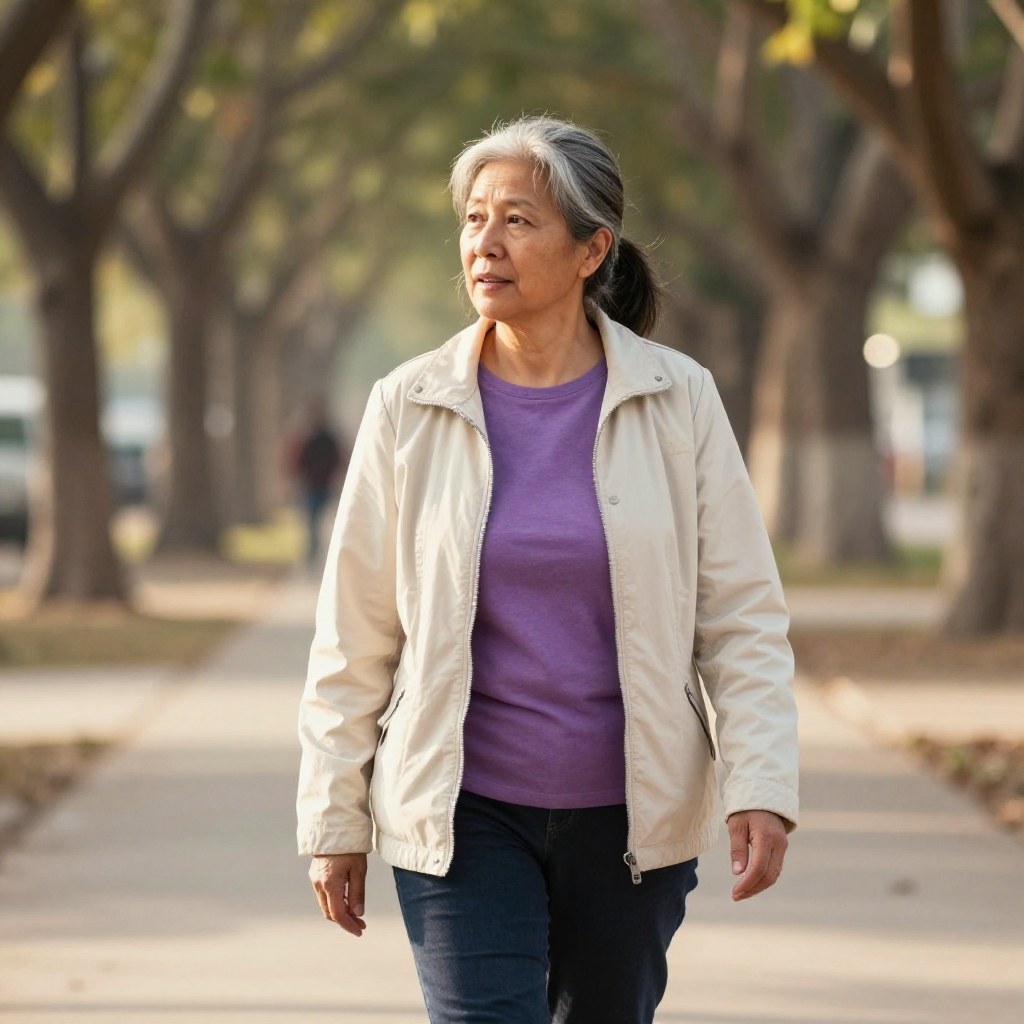
By Diane Marsh··10 min read
Claims on this page are checked against Harvard Health, NIAMS (NIH), the CDC, the Cochrane Database of Systematic Reviews, and the peer-reviewed journals Menopause and Women's Health Reports — all seven sources are linked below.

General education, not medical advice. Talk to your doctor before starting something new.
The short version
- Perimenopause changes what your body needs from exercise — "more cardio, eat less" is often exactly backwards.
- Ranked honestly: strength training first, then regular activity, then sleep and mobility — never punishing cardio.
- The evidence that exercise eases hot flashes is genuinely thin — this article says so plainly, both directions.
- Fat shifting toward your middle after estrogen drops is a heart-and-blood-sugar issue, not an appearance one — and no workout targets one spot.
- Hormone therapy is a real conversation for your own doctor, not something this article will weigh in on.
A doctor once looked at my chart, my age, and the few pounds that had crept on that year, and gave me the same advice almost every midlife woman I know has gotten: do more cardio, and eat less. So I did — for months.
I felt worse, not better. More tired. More inflamed. More discouraged. And the number on the scale barely moved anyway. It turns out there's a real, physical reason that advice backfired, and it has nothing to do with willpower.
Perimenopause changes what your body actually needs from exercise, and "more cardio, fewer calories" is often exactly backwards. I want to walk you through the honest map: what's actually changing in your body right now, what genuinely helps (ranked, not just listed), what doesn't, a realistic week you can actually keep without a spreadsheet, and — just as important — what even the researchers openly admit they don't know yet.
What Perimenopause Actually Does To A Body That Trains
Let's start with what's real, because a lot of what you've been feeling has an actual name now — it isn't just aging, and it isn't in your head.
Doctors have started calling it musculoskeletal syndrome of menopause: the cluster of achy joints, tired muscles, new stiffness and fatigue that shows up as estrogen starts to drop.
Estrogen touches more of your body than most of us were ever taught in school — bone, joints, muscle, all of it. As it declines, bone density can drop faster than it did in your 30s, joints can feel stiffer, and muscle can take longer to bounce back after a hard effort.
Sleep and recovery change too. A lot of women tell me they're suddenly wide awake at 3 a.m. for no obvious reason, and a body that isn't sleeping well simply doesn't bounce back from a hard workout the way it used to. That's not you losing discipline — it's a genuinely different recovery curve, and it's one more reason 'push harder' is the wrong instinct right now.
None of this is a diagnosis, and even an accurate symptom list isn't one either. If you're reading this and nodding along, that's worth a real conversation with your own doctor, not a guess based on a blog post. Here's a fuller, honestly-sourced rundown of perimenopause symptoms if you want the whole picture before that appointment.
Capability is the goal through all of this, not a body that looks a certain way. A body that can carry the groceries in one trip, get up off the floor easily, and sleep through the night is the actual win — everything below is in service of that, not a smaller number on anything.
What Actually Helps, Ranked Honestly
Here's the part I actually feel confident about, ranked in the order I'd tell a friend over coffee.
- Strength training, first. It's the one thing nearly every major source on this topic agrees on — building and holding onto muscle and bone by asking them to do real work, at least twice a week.
- Regular activity, most days. Something in the neighborhood of 150 minutes a week — walking counts, and so do swimming, dancing, or anything that gets your heart working a little.
- Sleep and mobility, taken seriously. They don't feel like "real" exercise, but they do more heavy lifting than people expect. A stiff, exhausted body doesn't recover from training the way a rested one does.
A Realistic Week For Perimenopause
This isn't a rigid schedule — it's a rhythm. Some weeks you'll hit all of it. Some weeks you'll manage half. Both count.
| Movement | How Often | What It's Actually For |
|---|---|---|
| Strength training | 2–3 short sessions a week | Protects the muscle and bone you're naturally losing right now |
| Walking or easy cardio | Most days, any length that fits | Keeps your heart and mood moving without piling more stress onto a tired body |
| Gentle mobility or stretchingThis counts even on the days you do nothing else. | A few minutes, most days | Keeps stiff joints comfortable enough that you keep showing up |
| A true rest day | At least 1 day a week | Recovery is where the strength work actually pays off |
| Sleep, protected | Most nights, as best you can | Your body repairs muscle and regulates hormones overnight, not mid-workout |
Notice what isn't on that list: nothing punishing, nothing timed to the minute, nothing that assumes a body with unlimited recovery. If strength is the piece you're missing, this beginner plan is where I'd start. If walking is the piece you're missing, the free 4-week plan needs no equipment at all.
What Doesn't Help (Even Though It's Everywhere)
Punishing cardio is the big one. Piling extra high-intensity workouts on top of bad sleep and achy joints usually just adds fatigue to fatigue. It isn't the shortcut it's sold as.
Eating a lot less is the other one — and it's the one that actually backfired on me. Cutting calories hard, on a body that's already working to hold onto muscle, tends to cost you the muscle first, which is the opposite of what you need right now. If anything, a lot of women at this stage do better paying closer attention to eating enough — protein especially — not less.
So does anything promising to "balance" or "reset" your hormones in a bottle. Hormone levels are a medical picture your own doctor can actually measure — not something a supplement label can promise, no matter how confident the wording sounds.
I know a lot of you found this article searching some version of "menopause belly" — I'll use that exact phrase once, because it's what you typed, and then I want to talk about what's actually going on, because it was never really about how anything looks.
That's the real reason it's worth your attention — a heart-and-blood-sugar reason, not an appearance one. And no workout reaches in and empties out one specific spot. The same research on strength training after menopause found women's waist measurements dropped no more than in women who did nothing at all, even as their overall body fat went down. Muscle and steady habits are the actual levers here. Here's the fuller, honest version of that conversation if this is the piece you came here for.
The Hot Flash Question, Honestly
I want to be straight with you here, even though it isn't the answer most posts give you: exercise reliably easing hot flashes hasn't held up well in the best research available.
A broad review of the overall evidence landed in the same honest place.
I'm not going to hand you a promise the research can't back up, and that goes for strength training too. So the honest answer is: nobody knows for sure yet, and the more useful question is how to move in a way that works around hot flashes.
What that same 12-week study did find is worth something, though: the women who exercised slept a little better and felt a little less low, even while their hot flashes didn't change at all. That's a real, honest reason to keep moving through this, even if it never touches the hot flashes themselves. Here's how to build movement around hot flashes and rough sleep instead of fighting them — a more honest goal than chasing relief the research can't promise yet.
The One Thing I Won't Weigh In On
You'll see hormone therapy mentioned everywhere while you're researching this, so I want to address it directly and then step back. It's a real, legitimate option that a lot of women talk through with their own doctors, and the advice around it has changed over the years, so it's worth asking your doctor what's changed.
I'm not going to tell you whether it's right for you. That isn't a call I'm qualified to make, and it isn't one a blog post should make for you either — it depends on your own history and a real conversation with someone who actually knows it. Here's how to walk into that appointment prepared, if you haven't had it yet.
What Nobody Actually Knows Yet
I promised you the honest version, so here's the part that's still genuinely unsettled.
- Whether exercise helps hot flashes at all — the research so far says probably not much, and it's still thin.
- Exactly how much of what you're feeling is hormones, normal aging, or something else entirely — doctors are still working that out too.
- Why some women move through this transition easily and others get hit hard — nobody has fully explained that gap yet.
- How much of the muscle-and-bone research done on women in general applies to your specific health history — which is exactly why this stays a conversation with your doctor, not a formula.
- Whether a small trade-off, like an extra rest day instead of an extra workout, helps more than it costs for you specifically — the research on 'you' hasn't been done yet, only the research on women in general.
Musculoskeletal syndrome of menopause only got its official name in the last couple of years. That's not a knock on the research — it's an honest sign that the science is still catching up to what women have been describing to their doctors for decades, often without being believed. I'd rather tell you that plainly than pretend this is more settled than it actually is.
None of this is a diagnosis or a promise about your specific body — only what the general research supports, cited plainly below so you can check it yourself instead of just taking my word for it.
Where this comes from
Every claim above traces to one of these seven.
- 1Musculoskeletal syndrome of menopause: When menopause makes you ache all over
Harvard Health Publishing · 2026
Supports: That an estimated 70% of women experience joint pain, muscle aches, stiffness and fatigue linked to falling estrogen during perimenopause and menopause, serious enough to be debilitating for nearly a quarter of them, and that regular physical activity and strength training are part of managing it.
- 2Osteoporosis Causes, Risk Factors, & Symptoms
NIAMS (National Institutes of Health)
Supports: That osteoporosis risk rises substantially after menopause, driven in large part by declining estrogen, and that the disease often begins developing even before a woman's final period.
- 3Adult Activity: An Overview
CDC
Supports: That adults are guided toward about 150 minutes a week of moderate aerobic activity plus muscle-strengthening activity at least 2 days a week covering all major muscle groups — legs, hips, back, abdomen, chest, shoulders and arms.
- 4Resistance training for postmenopausal women: systematic review and meta-analysis
Menopause
Supports: That pooling the existing research on resistance training in postmenopausal women showed better functional capacity, higher bone mineral density and lower fat mass than no exercise, with no greater drop in waist measurement than no exercise at all — while the authors rated the certainty of this evidence as very low to low.
- 5Efficacy of Exercise for Menopausal Symptoms: A Randomized Controlled Trial
Menopause · 2014
Supports: That in a 12-week trial of sedentary, symptomatic women, moderate aerobic exercise did not reduce hot flash frequency or bother any more than usual activity did, but the exercise group saw small improvements in sleep quality, insomnia symptoms and depressive symptoms.
- 6Exercise for vasomotor menopausal symptoms
Cochrane Database of Systematic Reviews
Supports: That current evidence is insufficient to show whether exercise reduces hot flashes or night sweats compared with no active intervention, rating the overall quality of that evidence as low.
- 7Adverse Changes in Body Composition During the Menopausal Transition and Relation to Cardiovascular Risk: A Contemporary Review
Women's Health Reports · 2022
Supports: That fat tends to redistribute toward the abdomen as estrogen declines, and that this visceral fat is metabolically active — associated with higher cardiovascular risk, insulin resistance and an unfavorable lipid profile, not just a change in appearance.
Free, and printable
The free 4-Week Indoor Walking Plan
The plan sign-up is not live yet — the mailing list is still being set up. In the meantime, email hello@strongandrooted.com and Diane will send it to you herself.
One email when there is something worth sending. Unsubscribe whenever you like.
Frequently asked questions
Will exercise fix my hormones?
Why did more cardio and eating less make things worse for me?
How much strength training do I actually need?
Does exercise help with hot flashes?
The honest version of all this is a lot less exciting than "more cardio, eat less" — it's strength training a couple of times a week, walking most days, sleep you actually protect, and real patience with a body that's genuinely changing, not failing you. If you want the full, cited map of everything happening in your body right now, start with the complete guide to menopause and the midlife body. And if today's the day you finally decide to talk to your doctor about any of this, here's how to make that appointment actually count. You're not imagining any of this, you're not doing it wrong, and you're not starting from zero, either.
Free, and printable
The 4-Week Indoor Walking Plan
The plan sign-up is not live yet — the mailing list is still being set up. In the meantime, email hello@strongandrooted.com and Diane will send it to you herself.
One email when there is something worth sending. Unsubscribe whenever you like.
Written by
Diane Marsh
At 49 I was tired, achy, sleeping badly, and being told to do more cardio and eat less — which was making all of it worse. I started walking. Fifteen minutes, indoors, in socks. Three years later I am stronger than I was at forty. I write down exactly what I did, cite the research where it exists, and admit where it doesn't.
Diane is not a doctor, a physical therapist, or a dietitian. She is a woman who rebuilt her own strength after perimenopause, reads the research carefully, cites it, and says so when nobody actually knows.
Keep reading
Nobody sits you down at 40 and explains what's actually happening to your muscle, bone, metabolism and joints. Here's the honest, cited version — what's changing, why, what genuinely helps, and what even the researchers haven't figured out yet.
Menopause and Weight Gain: An Honest Look at What Movement Can DoEvery corner of the internet has an opinion about menopause weight gain, and most of it is diet culture wearing a lab coat. Here's the honest version instead: what's actually changing in your body, why it matters for your heart and blood sugar rather than your mirror, and what movement genuinely can — and can't — do about it.
Movement That Works Around Hot Flashes and Broken SleepHot flashes and broken sleep don't have to end your workouts. Here's the honest, well-sourced answer on what exercise can and can't do for hot flashes, plus how to keep moving around the heat and the bad nights instead of fighting them.